ENG
ENG
 ARA
ARA
 FRE
FRE



Carthy Stovia
 10 Nov 2025
You've just watched the final video. Completed the last project. Downloaded your certificate. You're officially a TyLearn Africa graduate.
Congratulations! This is a huge milestone that many people never reach.
But now comes the question that every graduate faces: "What happens next?"
You've learned to code. You've built projects. You understand the technologies. But how do you actually transform those skills into income? How do you go from "completed course" to "hired developer"?
This is where most self-taught developers get lost. They finish courses with skills but no clear path forward. They apply randomly to jobs, get discouraged by rejections, and eventually give up—convinced that their lack of a computer science degree is holding them back.
But it doesn't have to be that way.
At TyLearn Africa, we've developed a proven 90-day roadmap that our graduates follow to land their first remote job or freelance client. This isn't theory—it's the exact path hundreds of our students have successfully walked.
This guide will show you precisely what to do in the first three months after graduation to launch your tech career.

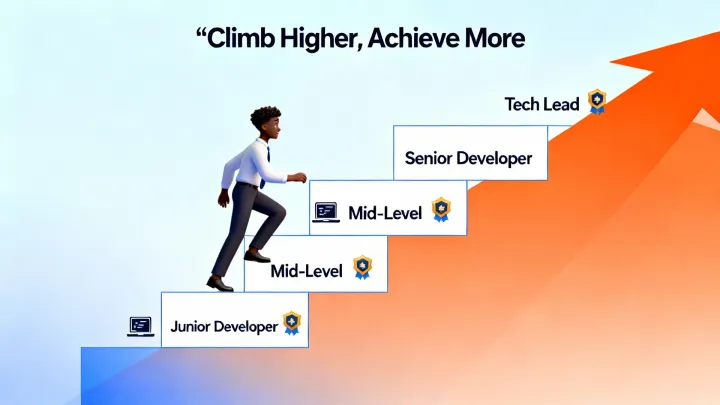
The Post-Course Reality Check: What Most Students Face
Before we dive into the roadmap, let's be honest about what you're up against. Understanding the challenges helps you prepare properly.
Challenge 1: The Skills vs. Experience Paradox
You have skills but no professional experience. Job postings ask for "2+ years experience" even for entry-level roles. How do you get experience if no one will hire you without it?
The truth: Most employers care more about what you can build than where you've worked. Your portfolio projects ARE your experience.
Challenge 2: Imposter Syndrome Hits Hard
After course completion, self-doubt creeps in. You see job descriptions mentioning technologies you haven't mastered. You compare yourself to developers with years of experience. You wonder if you're "good enough."
The truth: Every developer feels this way. Even senior engineers regularly Google basic syntax. What matters is your ability to learn and solve problems, not knowing everything upfront.
Challenge 3: The Job Search Feels Overwhelming
Where do you even apply? Upwork? LinkedIn? Company websites? How do you write applications that get responses? What should your rates be?
The truth: Job searching is a skill that requires strategy. Random applications don't work. Targeted, strategic job hunting does.
Challenge 4: The Waiting Game Tests Your Patience
You send 20 applications. You hear back from 2. You interview with 1. You get rejected. The process feels endless and discouraging.
The truth: Numbers are part of the game. Even experienced developers face rejection. Success requires persistence and continuous improvement, not perfection.
Challenge 5: Financial Pressure Mounts
You've invested time and money in learning. Family asks when you'll start earning. Bills don't pause while you job hunt. The pressure to see returns quickly is real.
The truth: Most graduates land their first opportunity within 60-90 days of focused effort. But you need a plan to get there efficiently.
The TyLearn Africa Post-Graduation Roadmap
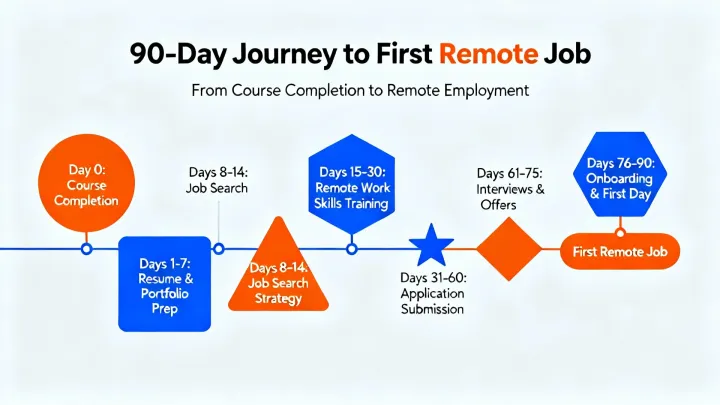
We've analyzed what our most successful graduates did differently. They followed a systematic approach rather than random job applications. Here's the proven 90-day roadmap:
Month 1: Portfolio Power - Build 3-5 exceptional projects that showcase your abilities Month 2: Strategic Job Hunt - Apply strategically to opportunities where you're competitive
Month 3: Close the Deal - Ace interviews and land your first paying opportunity
Let's break down exactly what to do each month.

Month 1: Portfolio Power (Days 1-30)
Your portfolio is your most powerful tool. It proves you can build real applications, not just complete tutorials. This month is about creating showcase projects that make employers say "I need to interview this person."
Week 1: Portfolio Planning & Setup
Days 1-2: Audit Your Current Projects
Review everything you built during your course. Ask yourself:
- Which projects are you most proud of?
- Which demonstrate different skills?
- Which solve real problems?
- Which need improvement before showing employers?
Days 3-4: Set Up Your Professional Presence
Create or optimize these essential profiles:
- GitHub: Upload all your best projects with clear README files
- LinkedIn: Complete profile with your new tech skills highlighted
- Portfolio Website: Simple, clean site showcasing your work
- Professional Email: Use firstname.lastname@gmail.com, not party_king99@yahoo.com
Days 5-7: Choose Your Three Hero Projects
Select three projects to polish and showcase. Choose projects that:
- Solve real problems, not tutorial clones
- Use modern technologies
- Show different skills (frontend, backend, full-stack)
- Have clean, professional UI/UX
- Include proper documentation
Pro Tip: One hero project should be relevant to the African market. Examples:
- M-PESA payment integration
- Agricultural supply chain management
- Local e-commerce platform
- Transport/matatu booking system
- Educational platform for African students
Week 2-3: Build or Improve Your Hero Projects
Project Enhancement Checklist:
For each project, ensure you have:
✅ Clean, Responsive Design: Works perfectly on mobile, tablet, and desktop ✅ Live Demo: Deploy on Netlify, Vercel, or Heroku so employers can actually use it ✅ Professional Code: Well-organized, commented, following best practices ✅ README Documentation: Explain what it does, technologies used, how to run it ✅ Screenshots/Video: Visual previews showing key features ✅ Real-World Features: Authentication, database integration, API usage ✅ Problem Statement: Clearly state what problem this solves
Time Allocation:
- Project 1 (Main showcase): 8-10 hours
- Project 2 (Secondary): 5-6 hours
- Project 3 (Tertiary): 3-4 hours
Week 4: Portfolio Website & GitHub Polish
Days 22-24: Build Your Portfolio Website
Create a simple, professional site that includes:
- Brief introduction about you
- Your technical skills (with honest proficiency levels)
- Your three hero projects with descriptions and links
- Contact information and social links
- Optional: Blog section (even 1-2 articles about what you learned)
Keep it simple. Focus on showcasing work, not fancy animations.
Days 25-27: GitHub Profile Optimization
Make your GitHub impressive:
- Pin your three best repositories
- Write detailed README files for each project
- Include screenshots in README files
- Add a professional profile README (GitHub now supports this)
- Contribute to open-source projects (even documentation fixes count)
- Ensure regular commit activity (green squares matter to recruiters)
Days 28-30: Get Feedback & Iterate
- Share your portfolio with your TyLearn mentor for feedback
- Post in the TyLearn community for peer review
- Ask 2-3 experienced developers to critique your projects
- Make necessary improvements based on feedback
Month 1 Success Metrics: ✅ Professional portfolio website live ✅ Three polished projects on GitHub ✅ LinkedIn profile complete and optimized ✅ Ready to start applying with confidence

Month 2: The Job Hunt Begins (Days 31-60)
Now that you have a solid portfolio, it's time to systematically pursue opportunities. This isn't about sending 100 random applications—it's about strategic, targeted job hunting.
Week 5: Set Up Your Job Search Infrastructure
Days 31-32: Create Your Application Materials
Develop three versions of your resume:
- Freelance Resume: Emphasizes projects and self-directed learning
- Remote Job Resume: Highlights relevant tech skills and remote work capabilities
- Local Job Resume: Includes any local context or connections
Each should be one page, ATS-friendly (no fancy graphics), and tailored to your target role.
Days 33-34: Set Up Job Search Tracking
Create a spreadsheet to track:
- Company/Client name
- Position applied for
- Date applied
- Application status
- Follow-up dates
- Interview stages
- Offer details
This prevents duplicate applications and helps you follow up strategically.
Days 35-37: Identify Your Target Opportunities
Create lists of where you'll search:
For Remote Jobs:
- Remote OK
- We Work Remotely
- AngelList
- LinkedIn (with remote filter)
- Stack Overflow Jobs
- GitHub Jobs
For Freelancing:
- Upwork
- Fiverr
- Freelancer.com
- PeoplePerHour
- Toptal (if experienced enough)
For Local Opportunities:
- BrighterMonday Kenya
- LinkedIn (Kenya filter)
- Company websites directly
- TyLearn job board
- Local tech community groups
Week 6-7: Application Blitz
The Numbers Game:
Plan to submit:
- Freelance Platforms: 10-15 proposals per week
- Remote Jobs: 8-10 applications per week
- Local Jobs: 5-7 applications per week
Total: 20-30 applications weekly
Quality Over Quantity (But Volume Still Matters):
Each application should be customized:
- Research the company/client
- Mention specific aspects of their posting
- Explain why you're a good fit
- Reference relevant portfolio projects
- Include a clear call-to-action
Freelance Proposal Template:
Hi [Client Name],

I noticed you're looking for [specific requirement from their posting]. I recently completed [relevant project from your portfolio] which demonstrates my experience with [technology they need].

I can deliver [their key requirement] by [specific approach you'd take]. You can see my work at [portfolio link].

I'm available to start immediately and can dedicate [X hours] to ensure quality delivery within your timeline.

Would you be open to a brief call to discuss your project in more detail?

Best regards,
[Your Name]
[Portfolio Link]
Days 38-51: Daily Application Routine
Create a consistent schedule:
- Morning (2 hours): Research opportunities and customize applications
- Afternoon (1 hour): Submit applications and follow up on previous ones
- Evening (1 hour): Work on skills you've noticed in job descriptions
Track everything in your spreadsheet.
Week 8: Interview Preparation
Days 52-54: Technical Interview Prep
Practice common interview questions:
- Explain how the internet works
- Describe your development process
- Walk through a project from your portfolio
- Solve basic coding challenges on platforms like HackerRank or LeetCode
- Explain key concepts (REST APIs, databases, authentication, etc.)
Days 55-57: Behavioral Interview Prep
Prepare stories using the STAR method (Situation, Task, Action, Result) for:
- A challenging project you completed
- A time you learned something new quickly
- How you handle deadlines and pressure
- Working with others (even in course communities)
- Receiving and implementing feedback
Days 58-60: Mock Interviews
Practice with:
- Your TyLearn mentor
- Fellow graduates
- Friends or family (for behavioral questions)
- Record yourself answering questions
Month 2 Success Metrics: ✅ 80-100+ applications submitted ✅ 5-10 interview requests received ✅ Interview preparation complete ✅ Growing confidence in your abilities

Month 3: Landing Your First Win (Days 61-90)
By month three, you should be getting interviews and feedback. Now it's about closing deals and landing that first opportunity.
Week 9-10: Interview Performance
Days 61-74: Active Interview Phase
As interviews come in:
Before Each Interview:
- Research the company/client thoroughly
- Review their tech stack
- Prepare 3-5 thoughtful questions to ask them
- Test your internet connection and video setup (for remote interviews)
- Have your portfolio projects open and ready to demo
During Interviews:
- Be authentic—they're evaluating culture fit, not just skills
- Ask for clarification if you don't understand a question
- Think out loud during technical challenges
- Show enthusiasm for the role and company
- Take notes on their feedback and concerns
After Interviews:
- Send thank-you emails within 24 hours
- Address any concerns that came up during the interview
- Reiterate your interest and fit for the role
- Ask about next steps and timeline
Handling Rejection:
You will face rejection. Every developer does. When it happens:
- Ask for specific feedback on how to improve
- Implement that feedback immediately
- Thank them for their time
- Stay in touch for future opportunities
- Move forward with more applications
Week 11-12: First Opportunity Conversion
Days 75-84: Negotiation & Decision-Making
When offers come in:
For Freelance Projects:
- Don't undervalue yourself (minimum $15-20/hour for beginners)
- Clarify scope, timeline, and payment terms before starting
- Use contracts or platform protections
- Ask for partial payment upfront for larger projects
- Under-promise and over-deliver on your first project
For Remote Jobs:
- Research typical salaries for your role and location
- Ask for 10-15% more than their initial offer
- Negotiate for benefits like professional development budget, equipment, flexible hours
- Get everything in writing before accepting
- Ask about growth opportunities and career progression
Days 85-90: Onboarding & First Week
You did it! You landed your first opportunity. Now make it count:
First Project/Job Success Tips:
- Over-communicate—update clients/managers proactively
- Ask questions when unclear—don't waste time guessing
- Document your work and decisions
- Meet deadlines (or communicate early if you can't)
- Request feedback regularly
- Build relationships with teammates/clients
Month 3 Success Metrics: ✅ First paid opportunity secured ✅ Successful onboarding complete ✅ Positive feedback from first client/employer ✅ Clear path forward for continued growth

Real Success Stories: Where Our Graduates Are Now
Wanjiku's Journey: Course to Career in 67 Days
Wanjiku completed our Full-Stack Web Development course in February. By April 18th (67 days post-graduation), she had landed a remote position with a German startup paying €2,200 monthly (KSh 340,000).
Her strategy:
- Spent first month building a sophisticated e-commerce platform with M-PESA integration
- Applied to 15 remote jobs weekly, focusing on European startups
- Customized every application to mention specific company details
- Leveraged her bilingual skills (English/Swahili) as a unique value proposition
- Practiced technical interviews extensively with her mentor
David's Path: Freelance Freedom in 45 Days
David finished our Web Development course while working a day job. He wanted freelancing flexibility to continue working while building his business.
Within 45 days, he had:
- Secured 3 freelance clients on Upwork
- Earned $1,850 (KSh 240,500) in his first month of freelancing
- Built a sustainable pipeline of repeat clients
- Quit his day job to focus on freelancing full-time
His strategy:
- Created a Kenyan-focused portfolio project (matatu booking system)
- Applied to 20 Upwork projects weekly
- Started with competitive rates to build reviews
- Over-delivered on first projects to get 5-star ratings
- Gradually increased rates as reputation grew
Akinyi's Success: Local to Global in 82 Days
Akinyi started with a local Nairobi startup earning KSh 50,000 monthly. Within 82 days of graduation, she transitioned to a remote role paying $1,800 monthly (KSh 234,000).
Her strategy:
- Used local job to gain professional experience
- Built internal projects at local startup for portfolio
- Applied to remote jobs while employed (leveraged current position)
- Negotiated remote work first, then transitioned employers
- Used LinkedIn extensively to network with international recruiters
Peter's Transition: Security Guard to Developer in 94 Days
Peter was working security shifts while learning. He couldn't quit until he secured income. It took 94 days, but he went from KSh 18,000 monthly to KSh 80,000+ in freelancing.
His strategy:
- Focused entirely on freelancing (couldn't risk quitting for uncertain job offers)
- Applied to smaller projects ($50-200) to build reputation quickly
- Worked freelance gigs during off-hours while still employed
- Only quit security job after consistent monthly freelance income
- Now earns KSh 250,000+ monthly working remotely
Common Pitfalls to Avoid
Learn from graduates who struggled initially:
❌ Waiting for "Perfect" Portfolio: Your portfolio will never feel perfect. Ship projects and improve them based on feedback.
❌ Applying to Everything: Generic mass applications get ignored. Better to send 10 highly customized applications than 50 generic ones.
❌ Undervaluing Your Skills: Don't work for free or extremely low rates. You have valuable skills. Charge accordingly.
❌ Giving Up Too Soon: Most graduates who "failed" simply quit before reaching success. The ones who succeeded kept going despite rejections.
❌ Not Leveraging Community: Other TyLearn graduates are your allies. Share job leads, review each other's work, celebrate wins together.
❌ Stopping Learning: Tech evolves constantly. Continue learning new skills even while job hunting.
❌ Poor Communication: Respond to messages promptly. Update clients/employers proactively. Professionalism matters as much as technical skills.
The TyLearn Advantage: You're Not Alone
Here's what makes your post-graduation journey different at TyLearn Africa:
Continued Mentor Support
Your mentor doesn't disappear after course completion:
- Monthly check-in calls to discuss job search progress
- Resume and portfolio reviews
- Interview preparation and mock interviews
- Negotiation advice when offers come in
- Emotional support during the challenging job hunt
Exclusive Job Board
Access opportunities specifically curated for TyLearn graduates:
- Remote positions from our partner companies
- Freelance projects from vetted clients
- Local opportunities in Kenya, Uganda, Tanzania, Rwanda
- Direct introductions to hiring managers
- Referral bonuses when you recommend fellow graduates
Active Alumni Community
Join hundreds of successful graduates:
- Private Slack/WhatsApp groups for support
- Weekly job lead sharing
- Portfolio review exchanges
- Freelance project collaborations
- Salary negotiation advice
- Celebration of wins (we love celebrating!)
Lifetime Learning Access
Your learning doesn't stop:
- Free access to all course updates
- New content added regularly
- Emerging technology courses
- Advanced skill workshops
- Industry trend webinars
- Career development sessions
Success Guarantee
We stand behind our program:
If you:
- Complete your course fully
- Participate actively in mentorship
- Build the required portfolio projects
- Apply to jobs/clients consistently following our roadmap
- Engage with the community
And you still haven't landed a paid opportunity within 6 months of graduation, we'll:
- Provide extended 1-on-1 mentorship
- Connect you directly with hiring partners
- Review and optimize every aspect of your job search
- Work with you until you succeed
Beyond Your First Job: Long-Term Career Growth
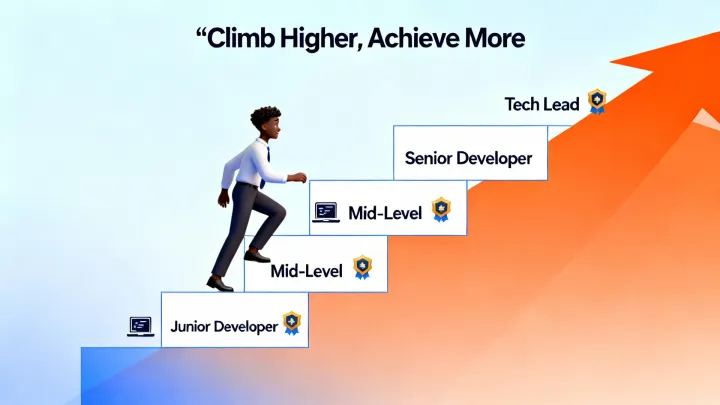
Landing your first opportunity is huge, but it's just the beginning. Here's how TyLearn graduates typically progress:
Year 1: Foundation
- First job/clients: $1,000-2,500/month (KSh 130,000-325,000)
- Focus: Gaining experience, building professional reputation
- Learning: Deepen technical skills, improve soft skills
Year 2: Growth
- Income: $2,500-4,000/month (KSh 325,000-520,000)
- Focus: Specialization in specific technologies or industries
- Learning: Advanced frameworks, leadership skills, business development
Year 3+: Mastery
- Income: $4,000-8,000+/month (KSh 520,000-1,040,000+)
- Focus: Senior roles, consulting, or building your own business
- Learning: Architecture, mentoring others, strategic thinking
Many TyLearn graduates eventually:
- Lead development teams at international companies
- Run successful freelancing businesses with multiple employees
- Launch their own tech startups
- Mentor new students (and earn extra income doing it)
- Relocate to other countries on work visas
Your Action Plan: Starting Today
You're reading this because you're considering enrolling or have recently graduated. Here's your immediate next steps:
If You Haven't Enrolled Yet:
- Choose your course based on your career goals
- Clear your schedule for 15-20 hours weekly of focused learning
- Commit to following this roadmap after graduation
- Join the TyLearn community even before starting
- Set realistic timeline expectations (course completion + 90-day roadmap = 4-5 months total)
If You Just Graduated:
- Print this roadmap and put it somewhere visible
- Schedule a call with your mentor to discuss your specific situation
- Block your calendar for the next 90 days—this is your job now
- Join the TyLearn alumni community immediately
- Start Month 1, Day 1 tomorrow morning
If You're Mid-Roadmap:
- Review where you are versus where you should be
- Identify any gaps or delays
- Adjust your strategy based on what's working/not working
- Reach out to your mentor if you're stuck
- Remember: persistence beats perfection
The Reality Check: This Requires Work
Let's be completely honest: This roadmap works, but it's not magic. It requires:
Daily Effort: 3-4 hours minimum during the job search phase Persistence: Rejections will happen. Keep going. Learning Mindset: You'll discover gaps in knowledge. Fill them. Professional Approach: Treat this like a job, not a hobby. Emotional Resilience: The process can be frustrating. Stay focused.
But here's the beautiful truth: Thousands of people with similar backgrounds, challenges, and resources have successfully made this transition. If they can do it, so can you.
The difference between those who succeed and those who don't isn't talent, luck, or privilege. It's persistence, strategy, and support.
At TyLearn Africa, you have the strategy (this roadmap) and the support (mentors, community, resources). You bring the persistence.
Ready to Start Your Journey?
Your tech career is closer than you think. Just 90 days from course completion to your first opportunity. Just 4-5 months total from enrollment to earning international income.
The question isn't "Can I do this?"
The question is "Am I ready to start?"
Special Launch Offer (Until November 14th):
Enroll before our Daystar University event and get:
- 20% discount on all courses (KSh 4,160-4,680)
- This proven 90-day roadmap as a structured program
- Priority mentor matching and extended support
- Free Career Accelerator Workshop
- Exclusive access to employer partner network
- Job placement assistance guarantee
Don't wait for the "perfect time." Start creating your future today.
Connect with Graduate Success Stories →
Track Your Progress
Use this checklist to track your 90-day journey:
Month 1: Portfolio Power
- Audit all course projects
- Set up GitHub, LinkedIn, Portfolio site
- Choose 3 hero projects
- Polish and deploy hero projects
- Get mentor feedback
- Make final improvements
Month 2: Job Hunt
- Create resume versions
- Set up tracking spreadsheet
- Identify target platforms
- Apply to 20-30 opportunities weekly
- Customize every application
- Follow up systematically
- Prepare for interviews
Month 3: Close the Deal
- Ace interviews
- Handle rejections professionally
- Negotiate offers
- Accept first opportunity
- Successful onboarding
- Request feedback
- Plan next career steps
Check off each item as you complete it. Forward momentum creates motivation!
Questions? We're here to help.
Contact us:
- Email: hello@tylearnafrica.com
- WhatsApp: +254 794 241 292
- Live Chat: tylearnafrica.com
Follow our journey:
- Instagram: @TyLearnAfrica
- Twitter/X: @TyLearnAfrica
- LinkedIn: TyLearn Africa
- TikTok: @TyLearnAfrica
- Facebook: TyLearn Africa
About TyLearn Africa: We don't just teach you to code—we guide you to career success. Our comprehensive post-graduation support includes mentorship, job placement assistance, and a proven 90-day roadmap followed by hundreds of successful graduates. Building on Workwise Academy's track record (2,000+ students trained), we're committed to helping 10,000 African students launch international tech careers by 2026. Your success is our success.
 19 Dec 2025